.png?width=200&height=92&name=Tribal%20Logo%20Dark%20Grey%20(1).png)
I know that feeling of needing to capture attention quickly. Before I joined Tribal Impact as an Executive Content Specialist, I spent more than 20 years in retail, most of it as a visual merchandiser. My job was to implement shop window designs that stopped people in their tracks, made them feel something, and encouraged them to step inside.
Now I use those same skills to help senior and executive leaders show up on LinkedIn in a way that opens doors, builds influence, and attracts talent. LinkedIn can drive tangible business impact, and leaders who are active on LinkedIn score 20% points higher in employee engagement than average (Golin’s CEO Impact Index). Yet time restraints and not knowing what to post often get in the way.
In this blog, I’ll share how I work with leaders to overcome these challenges, the process we follow, and the measurable results it delivers. Proof that you can have a strong LinkedIn presence without adding to your to-do list.
Why even the most experienced leaders get stuck on LinkedIn
Most leaders underestimate how much they have to say. They have decades of experience, industry insights, experiences and stories their audience would find valuable, but no headspace to turn them into posts.
Without that visible presence, they risk missing out on influence, visibility, and connection with modern buyers, especially younger audiences, as well as existing and future talent. In fact, 70% of buyers feel more connected to a brand when the CEO is active on social media (Sprout Social).
Why a collaborative process creates better content
Every LinkedIn profile we work on still belongs to the leader. They need to be completely happy with what’s posted, and getting there takes trust, built through honest conversations, mutual feedback, and a focus on results.
Collaboration works because it keeps the leader’s personality and expertise front and centre. For example, one leader I work with prefers deeper conversations that explore their ideas from different angles, often uncovering topics they hadn’t considered before. Another thrives with a process that’s fast and efficient, starting each call with a clear list of topics to cover. Adapting to each style means the content feels authentic, natural, not forced. And that’s what makes it resonate with their audience.
Just like a shop window, the layout and message need to fit the audience. There’s no one-size-fits-all display, and there’s no one-size-fits-all LinkedIn strategy. High trust workplaces generate revenue per employee 8.5 times higher than low trust organisations (Great Place To Work®), and that trust starts with how leaders present themselves and connect with others.
How leaders can learn from shop windows
That time in retail shaped everything about how I work with leaders today. A shop window is often the first impression someone gets of a brand. If it’s cluttered, confusing, or not regularly updated, people walk past without a second glance. The same applies to a LinkedIn profile or content displayed in the feed.

The discovery stage is like planning the display. We start by understanding what makes the leader tick, their values, passions, and what they want to be known for. We agree on the “hero pieces”, the core themes and ideas that will catch their audience’s eye.
Monthly content briefing calls are like refreshing the display for the new season. Sometimes leaders arrive with fresh ideas ready to go. Other times, I help them spot the hidden details, a recent conversation, event, or team success, that can be turned into a post people stop to read.
Turning a blank page into authentic, impactful posts
I want to share the process I use with the leaders I work alongside because I believe it can help anyone consistently turn “I don’t know what to post” into content that feels natural, relevant, and worth reading.
- Discovery and goal setting
I start by finding out what makes them tick; their passions, values, and what they want to be known for. This ensures the content reflects the person behind the brand. - Defining tone of voice and key themes
Agreeing on a mix of business insights and thought leadership topics keeps posts relevant while showcasing expertise. - Monthly content briefing calls
Short, focused sessions help spark ideas from recent events, conversations, or successes. This often uncovers topics the leader didn’t realise would resonate. - Drafting and collaboration
Posts are written in their voice, refined together, and approved using whatever method fits their day; email, Teams, or voice notes. - Ongoing support and refinement
We adjust the pace and focus based on results and the leader’s schedule, keeping things sustainable long term.
Why leaders stay engaged and keep showing up
The process works because it’s flexible, efficient, and built around how each leader prefers to work. When people feel understood and supported, they’re more willing to share ideas that go beyond the obvious. That’s where the real value comes from.
Relationships are a huge part of this. Some leaders I’ve worked with for years have renewed programmes multiple times because they value having a partner who understands them. One even told my team leaders she renewed on the proviso that she keeps working with me, something that made me feel incredibly proud, knowing she trusted our conversations and valued the relationship we’d built. Others have built enough confidence to post independently, adding their own updates alongside what we create together.
And it’s not all business. Building rapport through human moments, whether it’s swapping plant care tips or talking about a weekend of junk modelling with my son, helps leaders see that LinkedIn works best when it feels real. Those moments often inspire the posts that get the most authentic engagement.
What happens when leaders post consistently
When leaders post regularly with the right balance of insight, personality, and relevance, the results are clear. On average, executives we work with see their connections expand by nearly 20% and their follower numbers grow by almost 40%.
That kind of growth signals a significant increase in visibility and influence, opening up new opportunities to connect with the right people.
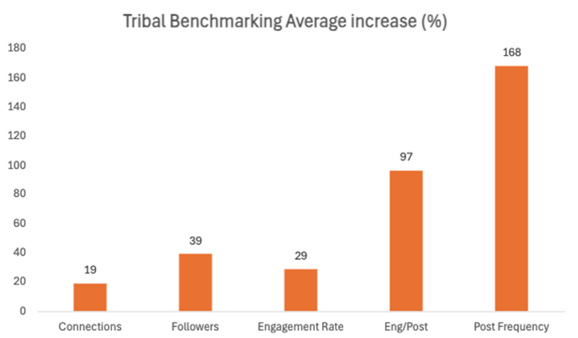
This chart shows the average percentage increases leaders achieve across LinkedIn activity and engagement during when working with Tribal Impact.
These results don’t just mean more content; they show a shift in visibility, influence, and quality of engagement. Higher engagement rates indicate the content is landing with the right audience, while more followers and connections extend the reach of their voice. A consistent posting habit also keeps leaders present in industry conversations rather than disappearing from view.
Just like keeping a shop window fresh, regular activity on LinkedIn tells your audience you’re active, relevant, and worth paying attention to.