.png?width=200&height=92&name=Tribal%20Logo%20Dark%20Grey%20(1).png)
Building human influence inside target accounts starts by connecting the people who already have the potential to influence your buyers: executives, subject matter experts, sales teams and marketing.
Rather than running separate executive visibility, social selling and Account Based Marketing (ABM) programmes, bring them together around shared target accounts and commercial priorities.
The goal is to build trusted relationships across the buying group, long before an opportunity enters your pipeline.
The challenge isn't necessarily the tools. It's how we get people to use them.
I've spent years walking into sales and marketing teams that have bought all the right tools and still struggle to build pipeline.
Marketing invests heavily in building visibility across target accounts, using intent data, paid media and increasingly sophisticated ABM campaigns.
Meanwhile, sales teams are juggling customer meetings, account plans, proposals, forecasts and CRM updates.
Both teams are working towards growth, but they're not always working towards the same accounts.
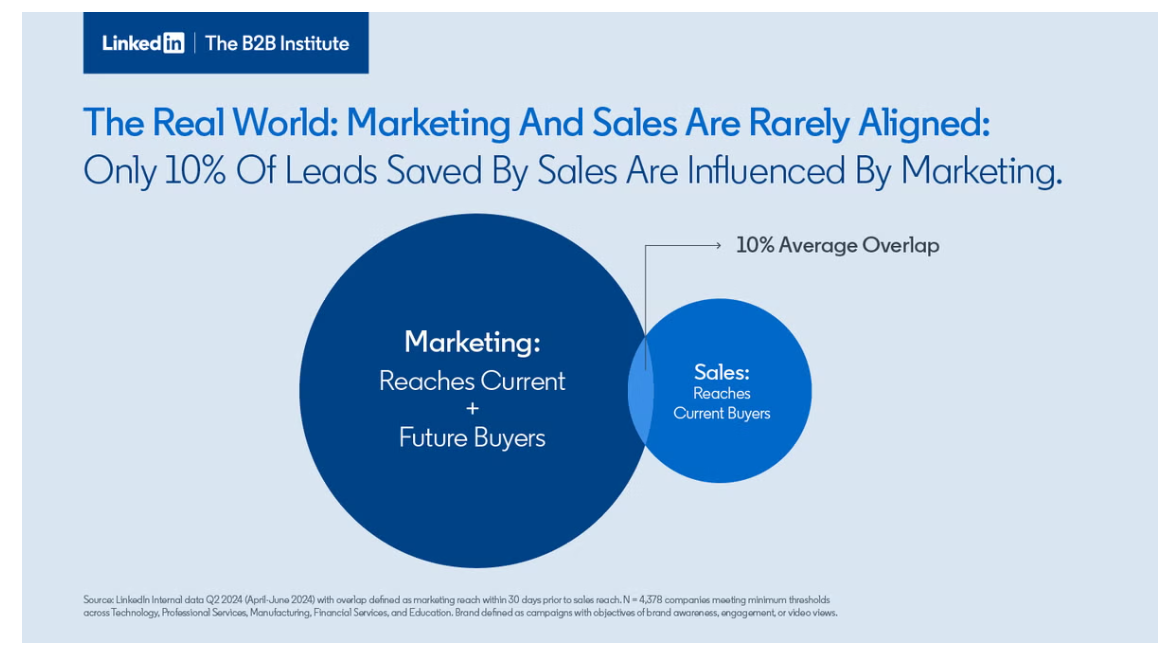
In fact, LinkedIn's Circle of Doom research found just 16% overlap between the accounts marketing targets and those sales teams are prospecting.
And that's where I believe the opportunity lies.
Why traditional ABM isn't enough
B2B sales is harder than ever.
More of the buying process is decided before sales are even invited into a conversation. Mind-share is increasingly won in AI engines as customers build their 'day one' lists before a vendor even knows an opportunity exists.
Over recent years, marketing organisations have invested heavily in Account Based Marketing (ABM), bringing sales and marketing together to target specific accounts.
Scaling ABM hasn't always been easy, but with intent tools such as 6sense and sophisticated paid media options such as LinkedIn Thought Leader Ads, targeting at scale has become more achievable.
Yet in most cases, marketing still sits in the driving seat: the content, creative, agency relationships, paid media and sometimes even the initial outreach messages.
Yet, more often than not, it's the relationships, introductions and warm referrals that ultimately land the meeting.
That's the part I often see missing from traditional ABM.
The challenge becomes even greater when you consider the number of people involved in a buying decision.
According to Forrester, the average B2B deal now involves 13 internal stakeholders and nine external stakeholders.
A salesperson connected to just one or two contacts is unlikely to have the influence needed across the wider buying group.
We need to stop thinking only about how to reach target accounts and start thinking about how to build influence inside them.
What is a human go-to-market growth engine?
A human go-to-market growth engine connects the systems of influence a business already owns; executives, account executives, BDRs, subject matter experts, marketing and paid media - and points them towards one commercial priority inside target accounts.
Instead of targeting the buying group purely from the outside, it surrounds the account with credible human influence from multiple directions: top down, bottom up and across the buying circle.
Most organisations manage these activities separately.
- Executive communications manages leadership visibility.
- Sales enablement delivers digital selling training.
- Marketing manages campaigns, content and paid media.
- Subject matter experts share knowledge, often independently of commercial priorities.
The opportunity is to connect these activities around the same accounts.
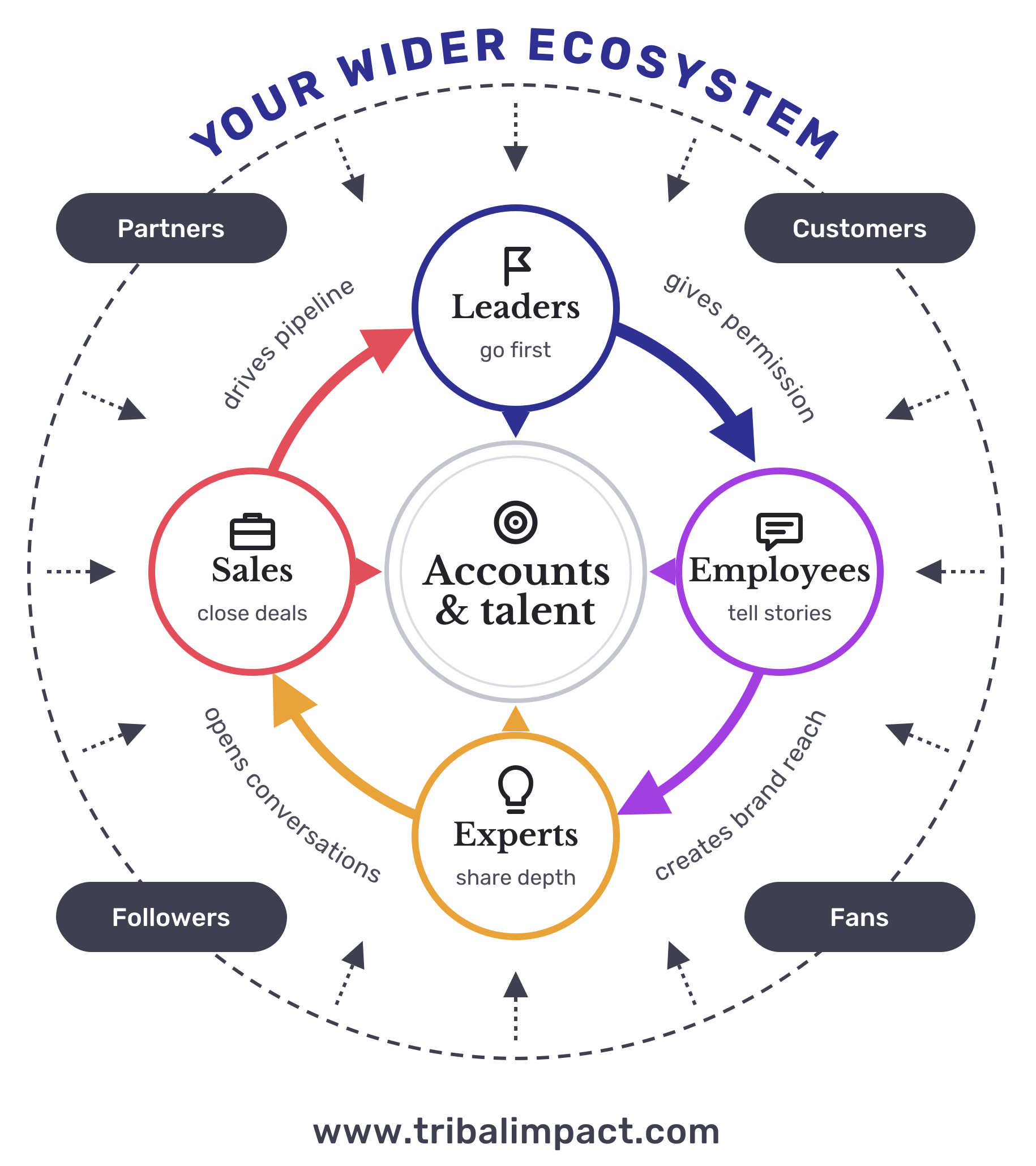
Executives build senior-level relationships and share perspectives on where the market is heading.
Subject matter experts publish thinking that answers buyers' questions, builds credibility and helps address the concerns that can stall opportunities.
Marketing orchestrates the activity, amplifying executive and expert content into the audiences sales teams are actively developing relationships with.
Account executives and BDRs use network insights, intent signals and engagement alerts to identify opportunities for relevant conversations.
Everyone contributes to influence, but around the same accounts and commercial priorities.
This isn't about asking everyone to become a content creator.
It's about recognising the different ways people can influence a buying decision and connecting those behaviours into a coordinated approach.
How do you build human influence inside target accounts? Five practical steps
Over the past few years, we've learned a great deal about what works, what doesn't and where these programmes typically stall.
Here are five lessons I'd prioritise.
1. Align around the same target accounts
Before you start activating employees, make sure sales and marketing are looking at the same accounts.
There's little value in targeting accounts showing strong market intent if you have no existing network or trusted relationships that could help open the door.
With Qlik, we learned to upload 6sense target account lists into LinkedIn Sales Navigator and analyse two different signals:
- Buyer intent: Is the account showing signs of being in-market?
- Relationship intent: Do we have the relationships and connections that could help us influence the buying group?
This helped us identify where sales teams should focus their relationship-building activity.
The important distinction is that buyer intent tells you where opportunity might exist. Relationship intelligence helps you understand your ability to influence it.
2. Start with your sales leaders
The single biggest predictor of whether one of these programmes takes hold, in my experience, is the behaviour of sales leaders.
In our benchmark of 860 B2B organisations over three years, we repeatedly saw the same pattern: employee activity rises and falls alongside leadership activity.
When sales leaders model digital selling behaviours, demonstrate their value and reinforce expectations, their teams are more likely to follow.
When leaders treat digital selling as a tick-box exercise, momentum quickly disappears.
We learned this through experience.
If the sales leader isn't engaged, the team will eventually lose interest.
My advice? Find the sales leaders who recognise the opportunity and work with them first.
You can build momentum with those teams rather than spend months trying to convince someone who doesn't see the value.
3. Let maturity determine how you enable people
Not every salesperson is ready or willing to build a visible professional voice.
That's okay.
Some will be comfortable publishing original perspectives. Others will prefer commenting, building connections or engaging with relevant content.
A small number will become highly influential voices within their markets.
The mistake is treating everyone as though they need the same training and support.
Instead, identify where people are starting from and develop the behaviours that will help them progress.
We've learned that the most successful participants are often those who are open-minded and willing to experiment.
They don't necessarily start with the strongest LinkedIn profiles or largest networks.
They start with a willingness to try.
And that matters because if someone doesn't believe in the approach, they're unlikely to adopt the behaviours needed to make it work.
4. Embed digital influence into existing sales processes
Salespeople don't need another meeting in their calendars.
According to Forrester research referenced in our work, salespeople spend around 26% of their time on administration and only approximately 23–26% on direct customer-facing selling.
Asking them to attend additional training sessions, coaching calls and programme updates can quickly make digital selling feel like another administrative burden.
We've found that fifteen minutes inside an existing team meeting can be far more effective than a standalone training programme.
Bring the data that matters to the sales director:
- Are connections into target accounts increasing?
- Are we reaching more senior decision-makers?
- Is buyer intent moving positively?
- Are new conversations and meetings being created?
Show how digital behaviours are supporting the accounts and opportunities they're already working on.
Digital influence should become part of how sales teams work, not another activity sitting alongside it.
5. Make your strongest digital sellers visible
Data tells part of the story.
But some of the most powerful evidence comes from the conversations happening between coaching sessions.
-
The connection request that was accepted.
-
The senior stakeholder who responded to a comment.
-
The prospect who mentioned seeing an executive's post.
-
The opportunity that restarted after someone connected with a different member of the buying group.
Capture these stories and bring them into sales meetings.
We've learned that salespeople listen differently when a colleague explains how something worked for them.
Marketing can present all the evidence in the world, but when a peer demonstrates how digital influence helped progress an opportunity, people pay attention.
How do you measure human influence inside target accounts?
Activity tells you people are busy. It doesn't necessarily tell you whether they're building influence.
If we're going to connect employee influence to commercial growth, we need to measure what happens between visibility and revenue.
At Tribal Impact, we call this Trust Movement.
It's about identifying the signals that show influence is reaching the right people, inside the right accounts, before the commercial results appear.
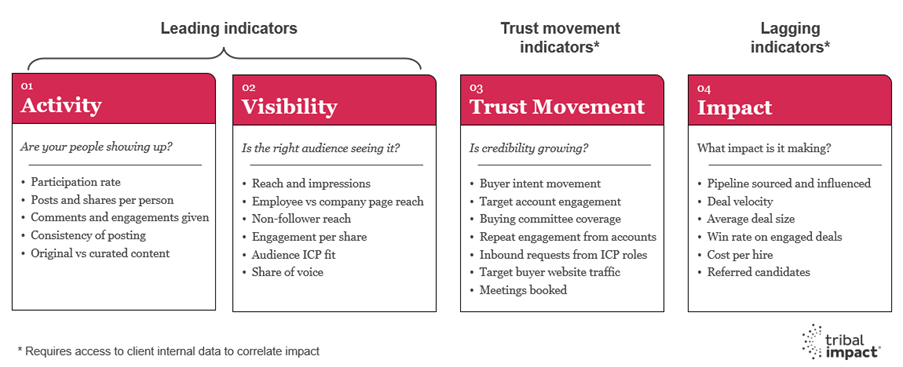
We look at four steps.
Activity: Are people changing how they work?
Track whether sellers are consistently adopting the behaviours needed to develop their networks and build influence.
Measures include engagement consistency, participation and Social Selling Index (SSI), used as a coaching baseline rather than a vanity metric.
Visibility: Is activity turning into visibility?
Activity is one indicator but are sellers active doing the right behaviours. Visibility looks more at the impact of their habit: Are they increasing their connections into target accounts? Are those accounts engaging with their content? Are they sharing content that resonates with audiences?
Trust Movement: Are we building influence in the accounts that matter?
This is where the measurement becomes more commercially relevant.
Look at connections into target accounts, seniority of those connections, stakeholder coverage, C-suite reach and meetings booked.
Rather than celebrating an increase in overall LinkedIn followers, ask whether we're developing relationships with the people who could influence a buying decision.
Commercial Impact: Is it contributing to growth?
Finally, connect the activity to commercial performance.
Look at pipeline held by participating sellers, deal velocity, deal size and opportunities influenced.
These measures help you understand whether the behaviours and relationships being developed are contributing to business outcomes.
The important point is to read these measures together, over time.
You can start to see influence moving towards your priority accounts long before pipeline figures confirm the result.
That's the measurement layer many programmes miss — and the one that makes the budget conversation more meaningful.
What does this look like in practice?
The Qlik story
We've been applying this approach with Qlik, working across sales leadership, account executives and BDR teams.
Over eighteen months, the programme demonstrated what happens when digital selling, executive visibility, account intelligence and sales behaviours are connected around commercial priorities.
The results included:
- 103% increase in connections into target accounts, growing from 850 to 1,727.
- 128 meetings booked across the year.
- 108% growth in pipeline held by programme participants during a half-year.
- Sellers with an SSI above 65 carried three times the average pipeline.
An earlier pilot also showed trained sellers building 29% larger total pipelines and 53% larger average deal sizes than untrained peers.
However, some of the most interesting results weren't simply the numbers.
An executive published a post, followed by timely outreach from an account executive, helping open a seven-figure opportunity.
In another example, a new-logo opportunity had gone cold. Rather than continuing to chase the same contacts, the AE used LinkedIn insights to identify and connect with additional stakeholders.
Six months later, the opportunity was back in motion and heading towards a proof of concept.
We also saw how paid media running alongside organic executive and employee activity created a stronger surround-sound effect than either approach alone.
These are the moments that demonstrate how the different parts of a human go-to-market growth engine work together.
The programme went on to win Forrester's B2B Program of the Year Award 2026.
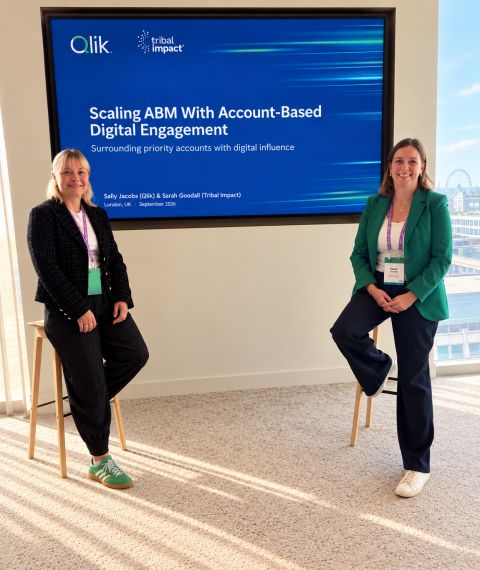
For me, the recognition reinforced something we've been learning for years: digital influence becomes much more commercially valuable when it is connected to real account priorities and embedded into everyday sales behaviours.
From ABM campaigns to a continuous growth engine
Above all else, a human-led go-to-market growth engine isn't a campaign but a way of working. That's what sets it apart from the way many organisations currently approach ABM today.
It's a combination of content, relationships, data, paid media, analysis, coaching and leadership reinforcement.
-
An engine that runs continuously.
-
Behaviours that build over time.
-
Relationships that strengthen.
-
Results that compound as more people adopt the approach.
It takes time. Not everyone will believe it's worth the effort and that's okay.
-
Start with the leaders and sellers who do.
-
Focus on the accounts that matter.
-
Measure progress in a language sales directors understand.
-
Keep connecting the different sources of human influence already inside your organisation.
Because the opportunity isn't simply to make your people more visible. The opportunity is to make their influence commercially valuable.
Frequently asked questions
Why don't salespeople use the digital selling tools we've invested in?
Often, the problem isn't the technology but how it fits into existing sales behaviours. Training people on a tool in isolation rarely creates lasting change. Adoption improves when sellers can see how digital selling supports the accounts, relationships and opportunities they're already working on.
Why do B2B deals stall even when marketing is generating engagement?
Engagement doesn't necessarily mean you've built relationships across the buying group. With multiple stakeholders influencing decisions, relying on one or two contacts leaves opportunities vulnerable. Building broader relationships and reaching senior decision-makers can help reduce that risk.
What is the difference between ABM and a human go-to-market growth engine?
ABM aligns sales and marketing around target accounts, often using campaigns, content, intent data and paid media. A human go-to-market growth engine extends that alignment to the people inside the organisation, connecting executives, experts and sales teams around the same accounts through ongoing relationship-building and digital influence.
How do you measure the commercial impact of employee influence?
Measure Trust Movement across three layers: behavioural adoption, account engagement and commercial influence. Track changes in seller behaviours, connections into target accounts, stakeholder coverage, meetings booked and pipeline performance. This provides a clearer picture of how employee influence contributes to growth.
Can employee influence programmes genuinely increase pipeline?
They can contribute to pipeline growth when connected to commercial priorities and supported by consistent sales behaviours. At Qlik, our programme saw target-account connections increase by 103% and participant pipeline grow by 108% in a half-year, alongside 128 meetings booked over the year.
The results demonstrate the commercial potential of combining human influence, account intelligence and sales enablement.