.png?width=200&height=92&name=Tribal%20Logo%20Dark%20Grey%20(1).png)
Lessons from Forrester B2B Forum EMEA 2026
Key takeaways: How do B2B brands earn trust when buyers decide before they call?
B2B buyers now build shortlists inside AI answers, often before a seller is involved. At Forrester's B2B Forum EMEA 2026, the strongest theme was that visibility comes from credible human voices, and success has to be measured in business outcomes rather than activity. Our programme with Qlik, named B2B Programme of the Year, shows what that looks like in practice: pipeline held by participants grew 108%.
How to B2B buyers shortlist suppliers?
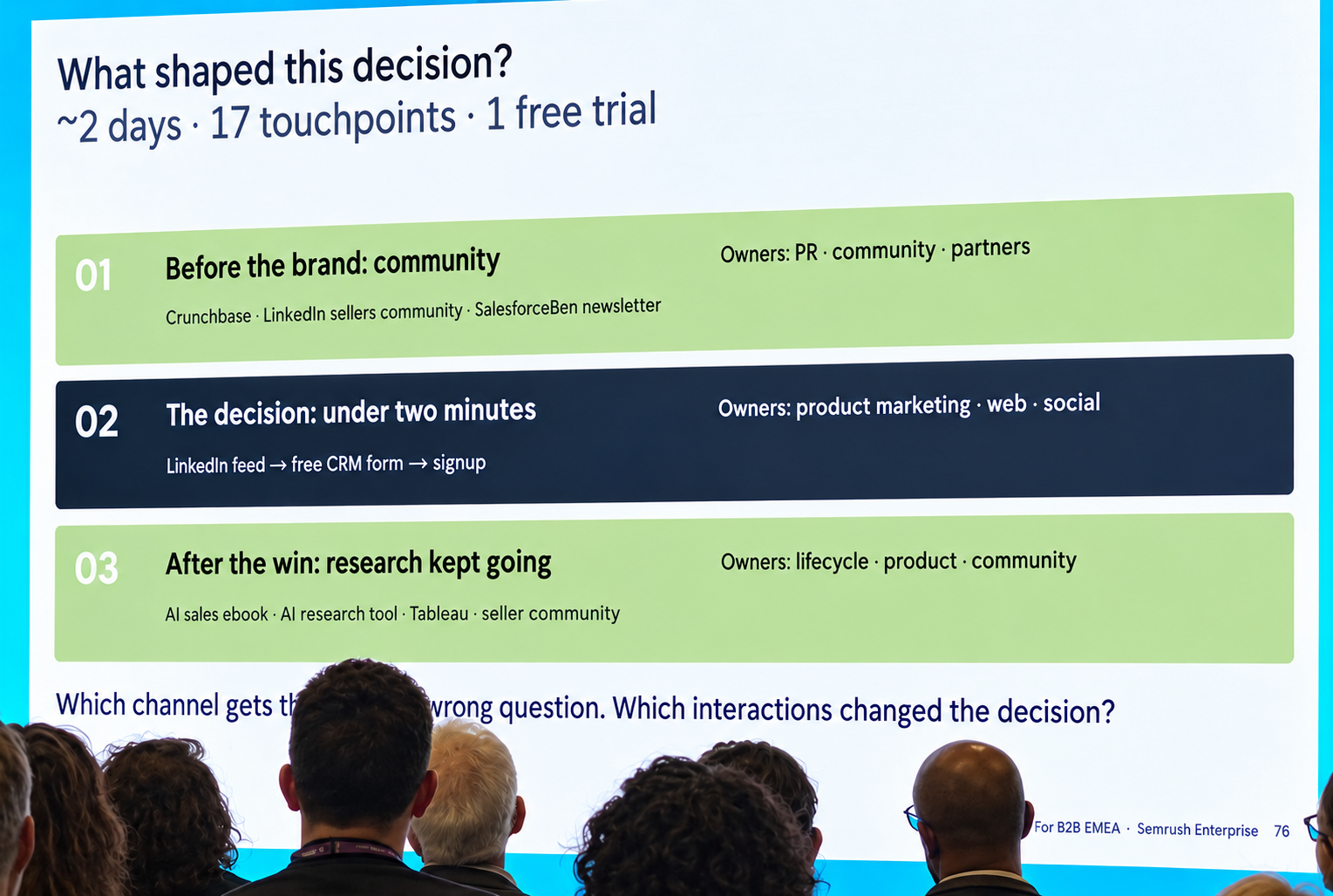
Buyers are making up their minds earlier and further away from vendors. One figure shared at the Forum put it starkly: in around half of cases, the buyer has already decided before they speak to a supplier.
Xerox described the same problem from the inside. Buyers don't want to meet an army of salespeople. The challenge is how to engage earlier and win trust before the first meeting, in a language the business understands.
AI has made this sharper. Several sessions described a visibility vacuum:
- Buyers research in AI. 94% of B2B buyers now use generative AI for research (6sense, 2025).
- Traffic from AI converts better. Speakers shared that LLM-driven traffic is three to four times more likely to convert, even as overall visibility falls.
- Buying groups are bigger. Forrester's 2026 State of Business Buying report puts the average buying group at 13 stakeholders and 9 external influencers.
If buyers are deciding in AI answers, the question for every CMO is simple.
Who is speaking for your brand when you aren't in the room?
Why do human voices matter more in AI search?
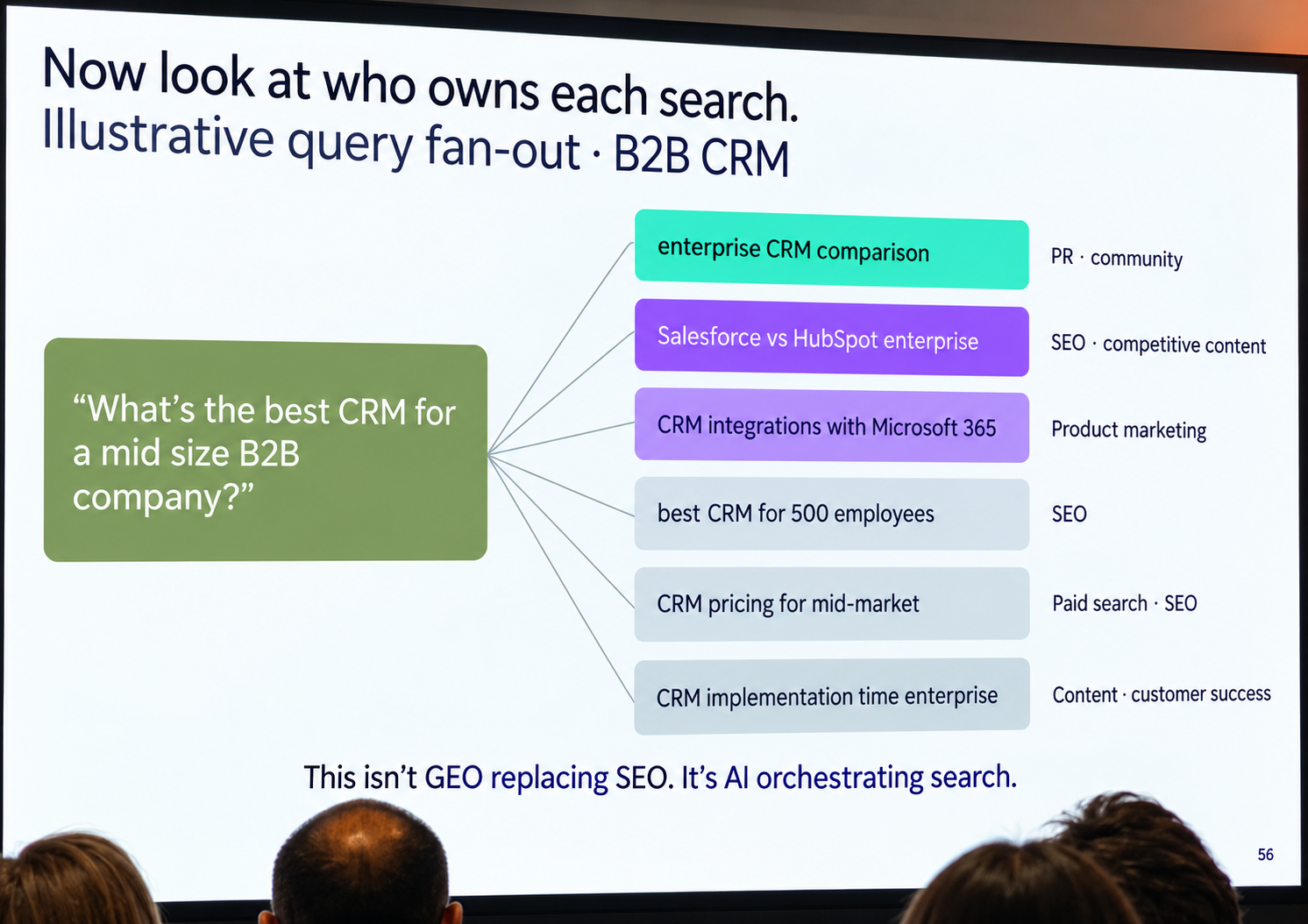
AI models build answers from many sources, and they favour named, credible experts. One line from the Forum stuck with me: The machine doesn't respect org charts! It pulls from whoever demonstrates real expertise, wherever they publish.
LinkedIn's own research backs this up:
- LinkedIn is the most-cited domain for professional queries in AI search (Profound, 2026).
- 75% of LinkedIn citations come from individual member profiles, compared with 25% from Company Pages (Meltwater, 2026).
- 95% of cited LinkedIn content comes from original posts rather than reshares (SEMrush, 2026).
There is an emotional side too. LinkedIn and Bain found that 34% of enterprise buyers rank being able to defend the decision if it went wrong as their top emotional need.
Relational qualities such as "easy to work with" outweigh rational ones by three to one. Buyers want the safe choice, and safety comes from people they trust.
For B2B brands, this means your experts, leaders and sellers are now part of your visibility strategy. Their voices carry the credibility that brand content alone can't.
Why is measuring activity holding B2B marketing back?
Forrester made the point that core B2B processes, from attribution to budgeting, rely on engagement data. AI is disrupting that data, so teams need to align measurement to business challenges and focus on return on objectives (or outcomes).
Most employee advocacy programmes still report posts, shares and engagements - maybe earned media value and traffic volume. Those numbers show effort. They don't show whether trust is moving or pipeline is growing.
At Tribal, we measure four stages:
- Activity: are people showing up?
- Visibility: are they being seen by the right accounts and in AI answers?
- Trust Movement: are relationships and credibility shifting inside buying groups?
- Business Impact: is pipeline, deal size or velocity changing?
Activity is where measurement starts. Business impact is where it has to finish.
What did the Qlik programme do differently?
We presented the programme with Sally Jacobs from Qlik under the title Scaling ABM With Account Based Digital Engagement. The same week, Tribal and Qlik were named B2B Programme of the Year for tying influence and visibility to commercial growth.
The problem. Qlik had the tools in place, yet around half of licensed sellers were inactive. Sellers were arriving late to conversations, and too many accounts relied on a single contact. With 13 stakeholders in the average deal, one relationship is one point of failure.
The approach. The programme was cross-functional and led by the CMO, with sales, marketing and executives working the same accounts together. Here's what we learned:
- Activate leaders first. Teams follow what leaders model if they aren't onboard, sales behaviour slowed.
- Let the data decide. Sellers were grouped by maturity and existing digital behaviour - it allowed us to target the enablement more specifically.
- Embed into workflows. Fifteen minutes inside calls that already existed, rather than extra training - they already spend a third of their time on admin (according to Forrester).
The results.
- Connections into target accounts up 103%, from 850 to 1,727
- C-suite connections in the top 100 accounts up 15%
- Pipeline held by participants up 108% from August to December 2025
- Sellers with an SSI of 65 or more held 3x the average pipeline
- 128 meetings booked across the duration of the program (12 months)
The initial pilot (before the scaled program above) had already given us a head-start. Compared with untrained digital sellers, trained sellers had 19% fewer deals in the pipeline, a 29% larger total pipeline and 53% larger average deal sizes. Fewer, bigger, better qualified opportunities.
Lessons learned
-
Batched content approvals stalled progress, so we moved to a drip model for all sellers - to support their digital visibility and activity when they aren't in the room with customers.
-
Standard one-size-fits-all LinkedIn training didn't land, so we switched to one-to-one coaching with account-level data.
-
The biggest surprise came from one executive's post, followed up quickly by an AE, which landed a seven-figure opportunity. Timing is everything.
What should CMOs do next?
From what I've learned this week, here's what I believe CMOs need to do in order to move forward.- Pick the 20 commercial prompts your buyers are most likely to ask AI, using real questions from sales calls.
- Identify the experts and leaders who can credibly answer them. Our map-to-matrix model can help here.
- Activate leaders and executives first, then pair account executives and BDRs to work on named accounts - together!
- Prioritise those accounts by in-market intent but then upload to LinkedIn Sales Navigator and prioritise again by Buyer Intent - focus on accounts where you have a warm referral/introduction.
- Build digital selling habits into existing workflows instead of adding programmes and calls to already busy salespeople.
- Measure beyond activity: track visibility, trust movement and pipeline together, and give AI visibility at least 30 days before judging it.